


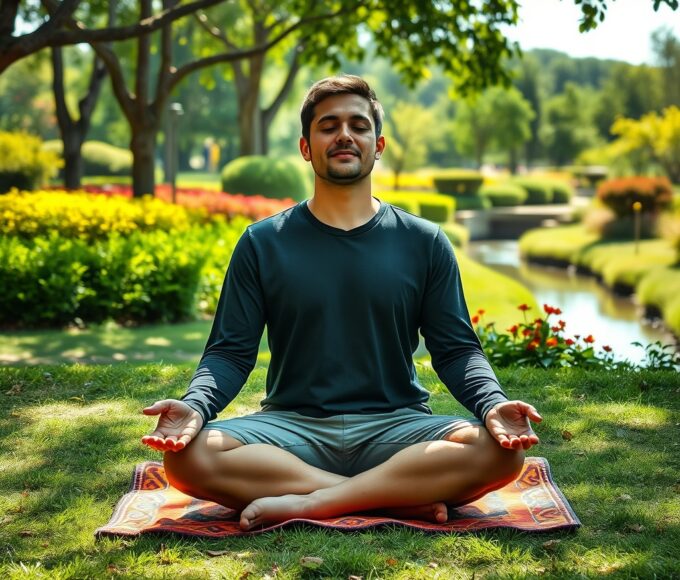



















In the hustle and bustle of modern life, the concept of mindful living has emerged as a beacon of tranquility and balance. Mindfulness, the practice of maintaining a moment-by-moment awareness of our thoughts, feelings, bodily sensations, and surrounding environment, has transcended its Buddhist roots to become a secular practice embraced by people worldwide.
The Foundations of Mindful Living
Mindful living is grounded in the principle of being present. It’s about experiencing life as it unfolds, rather than dwelling on the past or anticipating the future. This practice is not about emptying the mind, but rather about observing thoughts and feelings without judgment.
The Benefits of Mindful Living
Research has shown that mindful living can reduce stress, enhance performance, and increase insight and awareness. It can help us to respond more effectively to complex or difficult situations, and to see situations more clearly. Moreover, it can improve our physical health by lowering blood pressure, improving sleep, and alleviating gastrointestinal difficulties.
The Science Behind Mindfulness
Neuroscience has begun to uncover the mechanisms behind mindfulness. Studies using functional MRI scans have shown that mindfulness practice can lead to changes in the brain’s structure and function. These changes are associated with improvements in attention, memory, and emotional regulation. Furthermore, mindfulness has been linked to increased activity in the prefrontal cortex, the area of the brain responsible for executive functions such as planning, problem-solving, and impulse control.
Practical Steps to Mindful Living
Mindful Breathing
One of the simplest ways to practice mindfulness is through mindful breathing. This involves focusing your attention on your breath, the inhale and exhale. When your mind wanders, gently bring your focus back to your breath. This practice can be done anywhere, anytime, making it a versatile tool for cultivating mindfulness.
Mindful Eating
Mindful eating involves paying full attention to the experience of eating and drinking, both inside and outside the body. It involves noticing the colors, smells, textures, flavors, temperatures, and even the sounds of our food. It also means being aware of the body’s hunger and fullness cues, and acknowledging our responses to food without judgment.
Mindful Movement
Mindful movement practices such as yoga, tai chi, and qigong combine physical movement with mindfulness. These practices encourage us to focus on the sensations in our body as we move, helping to cultivate a sense of embodied mindfulness. They can also improve flexibility, strength, and balance, and reduce symptoms of stress and anxiety.
Overcoming Challenges in Mindful Living
Dealing with Distractions
In our digital age, distractions are ubiquitous. Mindful living requires us to consciously choose to focus our attention on the present moment, rather than allowing it to be hijacked by the constant stream of information and stimuli. This can be challenging, but with practice, it becomes easier to recognize distractions and gently bring our focus back to the present.
Cultivating Patience and Persistence
Mindfulness is a skill that requires practice. It’s not about achieving a particular state or experience, but rather about cultivating a new way of being. This requires patience and persistence. It’s important to approach mindfulness with an open mind and a willingness to learn, rather than with the expectation of immediate results.
The Impact of Mindful Living on Relationships
Improving Communication
Mindful living can enhance our relationships by improving our communication skills. When we are fully present, we are better able to listen deeply and respond thoughtfully. This can lead to more meaningful and satisfying interactions with others. Moreover, mindfulness can help us to respond more effectively to conflict, by allowing us to pause and choose our response, rather than reacting impulsively.
Fostering Empathy and Compassion
Mindfulness can also foster empathy and compassion. By cultivating a non-judgmental awareness of our own thoughts and feelings, we can develop a greater understanding and acceptance of others. This can lead to more compassionate and empathetic relationships, as we become more attuned to the needs and feelings of those around us.
As we journey through life, the practice of mindful living can serve as a compass, guiding us towards a greater sense of peace, balance, and connection. It’s not about escaping the challenges of life, but rather about meeting them with a sense of clarity and calm. By cultivating mindfulness, we can learn to dance in the rain, rather than waiting for the storm to pass. In this dance, we find not only resilience but also joy, gratitude, and a profound appreciation for the beauty and complexity of life.






Leave a comment