













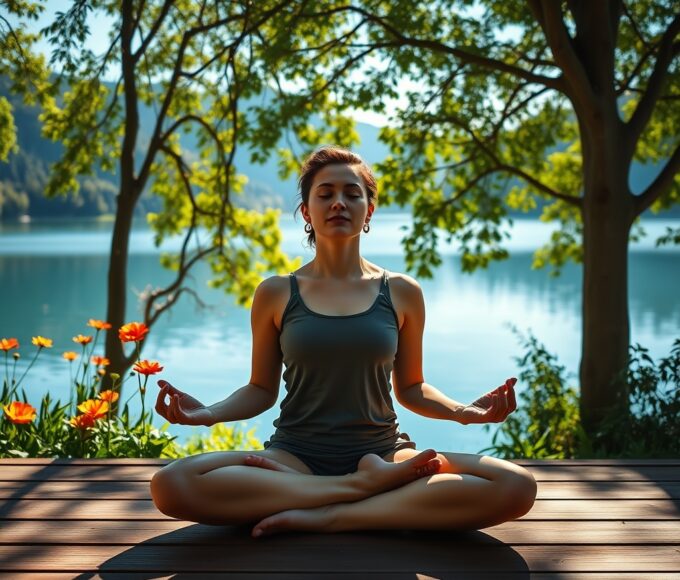








In the hustle and bustle of modern life, finding a moment of tranquility can seem like an impossible task. The constant barrage of notifications, deadlines, and responsibilities can leave us feeling overwhelmed and disconnected from ourselves. Mindfulness, a practice rooted in ancient traditions, offers a sanctuary amidst the chaos, providing a path to inner peace and improved well-being.
The Origins and Evolution of Mindfulness
Mindfulness has its roots in Buddhist meditation practices that date back over 2,500 years. The term itself is derived from the Pali word ‘sati,’ which means awareness or remembrance. However, mindfulness as we understand it today has evolved and been secularized, making it accessible to people of all faiths and backgrounds. Jon Kabat-Zinn, a pioneer in the field, played a significant role in this transformation by developing the Mindfulness-Based Stress Reduction (MBSR) program in the late 1970s.
The Science Behind Mindfulness
Over the past few decades, scientific research has increasingly validated the benefits of mindfulness. Studies have shown that regular mindfulness practice can lead to structural changes in the brain, including increased gray matter density in regions associated with learning, memory, and emotional regulation. Furthermore, mindfulness has been found to reduce symptoms of stress, anxiety, and depression, while enhancing overall well-being and quality of life.
One of the key mechanisms through which mindfulness exerts its effects is by promoting a state of present-moment awareness. This state allows individuals to observe their thoughts and feelings without judgment, creating a sense of distance and perspective that can be incredibly liberating. Additionally, mindfulness has been shown to activate the parasympathetic nervous system, which is responsible for the body’s rest-and-digest response, counteracting the harmful effects of chronic stress.
The Art of Mindfulness Practice
While the science of mindfulness is fascinating, the true essence of mindfulness lies in its practice. Mindfulness is not merely a technique or a tool; it is a way of being, a way of relating to ourselves and the world around us. The art of mindfulness practice involves cultivating an attitude of openness, curiosity, and acceptance towards our experiences, whatever they may be.
There are numerous ways to cultivate mindfulness, from formal meditation practices to informal, everyday activities. Formal practices include seated meditation, walking meditation, and body scan meditation, all of which involve focusing attention on a specific object or experience, such as the breath, bodily sensations, or sounds. Informal practices, on the other hand, involve bringing mindful awareness to everyday activities, such as eating, showering, or even washing dishes.
Seated Meditation
Seated meditation is perhaps the most well-known mindfulness practice. It involves sitting comfortably with an upright posture, either on a cushion or a chair, and focusing attention on the breath. The goal is not to control the breath or make it any particular way, but simply to observe it as it is. When the mind inevitably wanders, as minds do, the practice involves gently bringing the attention back to the breath, without judgment or criticism.
Walking Meditation
Walking meditation is another powerful mindfulness practice that involves focusing attention on the sensations of walking. This can include the feeling of the feet touching the ground, the movement of the legs, or the swaying of the arms. Walking meditation can be particularly helpful for those who find it difficult to sit still for extended periods, and it offers an opportunity to bring mindfulness into movement and activity.
Body Scan Meditation
Body scan meditation involves lying down or sitting comfortably and systematically focusing attention on different parts of the body, from the toes to the head. The practice involves observing any sensations that arise, whether they are pleasant, unpleasant, or neutral, without trying to change or judge them. Body scan meditation can be a powerful way to cultivate awareness of the body and its sensations, and it can be particularly helpful for those dealing with chronic pain or illness.
Mindful Eating
Mindful eating is an example of an informal mindfulness practice that involves bringing awareness to the experience of eating. This can include noticing the colors, textures, and smells of the food, as well as the sensations of chewing and swallowing. Mindful eating can help to foster a healthier relationship with food, as well as a greater appreciation for the nourishment it provides.
Integrating Mindfulness into Daily Life
While formal mindfulness practices are essential for cultivating a strong foundation of mindfulness, the true power of mindfulness lies in its integration into daily life. Mindfulness is not something that is confined to the meditation cushion; it is a way of being that can be brought to every moment and every activity.
One of the keys to integrating mindfulness into daily life is to establish a regular mindfulness practice. This can involve setting aside a specific time each day for formal practice, as well as looking for opportunities to bring mindfulness into everyday activities. Additionally, it can be helpful to create reminders or cues to bring oneself back to the present moment, such as using the sound of a bell or the sensation of the breath as a reminder to pause and check in with oneself.
Another important aspect of integrating mindfulness into daily life is to cultivate an attitude of self-compassion. Mindfulness is not about achieving a particular state or experience; it is about being with whatever is present, with openness and acceptance. This means that there will inevitably be times when the mind is distracted, or when difficult emotions arise. Rather than judging or criticizing oneself for these experiences, the practice involves treating oneself with kindness and understanding, just as one would treat a good friend.
As we continue to navigate the complexities and challenges of modern life, mindfulness offers a powerful tool for cultivating inner peace, resilience, and well-being. By integrating mindfulness into our daily lives, we can learn to relate to ourselves and the world around us with greater openness, curiosity, and compassion. In doing so, we not only enhance our own lives but also contribute to a more mindful and compassionate world. The journey of mindfulness is a lifelong one, filled with moments of insight, challenge, and growth. It is a journey that is well worth taking, for it leads us back to ourselves and to the present moment, where life truly unfolds.






Leave a comment