

















Imagine waking up to the rich, inviting aroma of freshly brewed coffee wafting through your home. The ritual of brewing coffee is not just about the caffeine kick; it’s an experience that engages all your senses. With the right knowledge and tools, you can transform your kitchen into a café, crafting the perfect cup of coffee tailored to your taste.
The Journey of Coffee: From Bean to Cup
The journey of coffee begins long before it reaches your cup. It starts with the coffee plant, which produces cherries containing the coffee beans. These beans are harvested, processed, and roasted to bring out their unique flavors. Understanding this journey can help you appreciate the nuances in different coffee varieties and roasts.
Choosing the Right Beans
The foundation of a great cup of coffee is the beans. There are two main types of coffee beans: Arabica and Robusta. Arabica beans are known for their smooth, complex flavors, while Robusta beans are stronger and more bitter. The choice between these beans, or a blend of both, depends on your personal preference.
When selecting beans, look for recently roasted ones. Coffee beans are at their peak flavor within a few weeks of roasting. Many specialty coffee shops and online retailers provide the roast date on the packaging, making it easier for you to choose fresh beans.
The Importance of Grinding
Grinding your coffee beans just before brewing is crucial for achieving the best flavor. Pre-ground coffee loses its aroma and flavor quickly due to increased surface area exposure to air. Investing in a good quality burr grinder can make a significant difference in the taste of your coffee.
The grind size also plays a vital role in the brewing process. Different brewing methods require different grind sizes. For example, a coarse grind is ideal for French press, while a fine grind is suitable for espresso. Experimenting with grind sizes can help you fine-tune your coffee’s flavor profile.
Brewing Methods: Exploring Your Options
There are various brewing methods, each with its unique characteristics and flavor profiles. Some popular methods include drip brewing, French press, pour-over, and espresso. The choice of method depends on your taste preferences and the equipment you have available.
Drip Brewing
Drip brewing is one of the most common methods, especially for those who prefer convenience. Automatic drip coffee makers are widely available and easy to use. To enhance the flavor, use filtered water and clean your coffee maker regularly to prevent the buildup of mineral deposits and old coffee oils.
French Press
The French press, also known as a press pot or plunger pot, is a classic brewing method that produces a full-bodied, rich cup of coffee. The process involves steeping coarsely ground coffee in hot water and then pressing the plunger to separate the grounds from the liquid. This method allows for greater control over the brewing time and temperature, resulting in a more customized cup of coffee.
Pour-Over
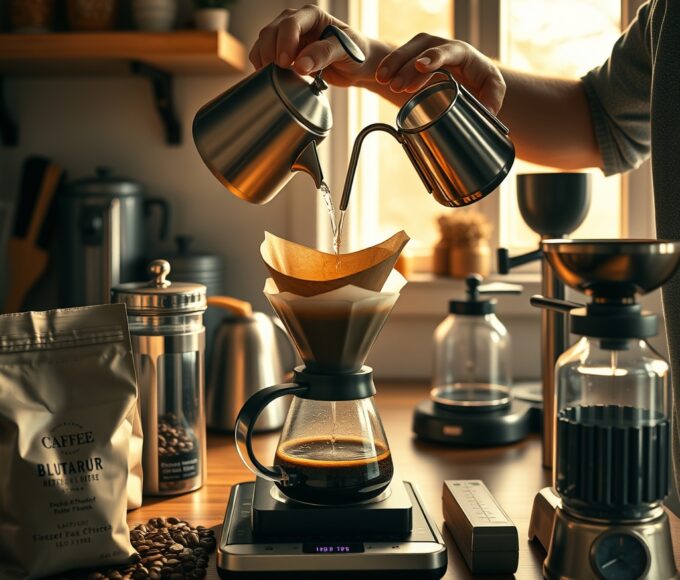
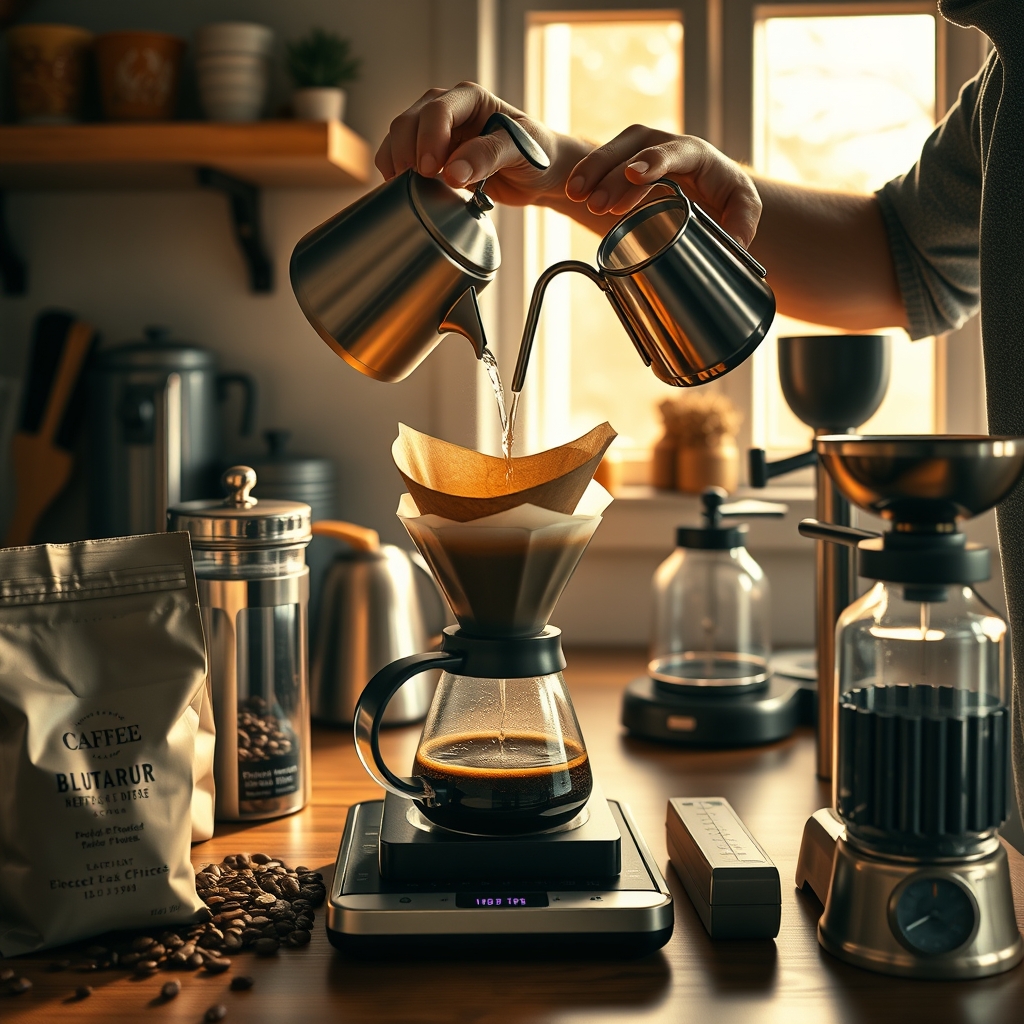
Pour-over brewing is a manual method that involves pouring hot water over coffee grounds in a filter. This method allows for precise control over the water temperature and flow rate, resulting in a clean, flavorful cup of coffee. Pour-over brewing is often favored by coffee enthusiasts who appreciate the ritual and craftsmanship involved in the process.
Espresso
Espresso is a concentrated coffee beverage brewed by forcing hot water under pressure through finely-ground coffee. This method produces a strong, rich, and creamy coffee with a layer of foam on top, known as crema. Espresso serves as the base for many popular coffee drinks, such as lattes, cappuccinos, and Americanos. Brewing espresso at home requires an espresso machine, which can be an investment, but the results are well worth it for espresso lovers.
The Science Behind the Perfect Cup
Brewing the perfect cup of coffee involves a delicate balance of several factors, including water temperature, brew time, and coffee-to-water ratio. Understanding the science behind these elements can help you refine your brewing technique and achieve consistent results.
Water Temperature
The ideal water temperature for brewing coffee is between 195°F and 205°F (90°C and 96°C). Water that is too hot can over-extract the coffee, resulting in a bitter taste, while water that is too cool can under-extract the coffee, leading to a weak, sour flavor. Using a thermometer or a kettle with temperature control can help you achieve the perfect water temperature.
Brew Time
The brew time, or the length of time the coffee grounds are in contact with the water, significantly impacts the flavor of your coffee. Different brewing methods require different brew times. For example, French press typically requires a brew time of 4 to 5 minutes, while pour-over methods may take around 2 to 4 minutes. Experimenting with brew times can help you find the sweet spot for your preferred flavor profile.
Coffee-to-Water Ratio
The coffee-to-water ratio refers to the amount of coffee grounds used relative to the amount of water. A common starting point is a ratio of 1:16, which means 1 gram of coffee for every 16 grams of water. However, this ratio can be adjusted based on your taste preferences. Using a kitchen scale to measure your coffee and water can help you achieve consistency in your brewing.
As you embark on your coffee brewing journey, remember that the perfect cup is subjective and varies from person to person. The key is to experiment with different beans, grind sizes, brewing methods, and techniques to find what suits your palate best. Embrace the process, savor the aroma, and enjoy the rich, satisfying experience of brewing coffee at home. With each cup, you’ll refine your skills and deepen your appreciation for the art and science of coffee brewing.






Leave a comment